Ramadan
Laylatul Qadr Dua: The Night of Power & Life-Changing Duas
Published by Tasbih Hub · 2026-02-23 · 12 min read
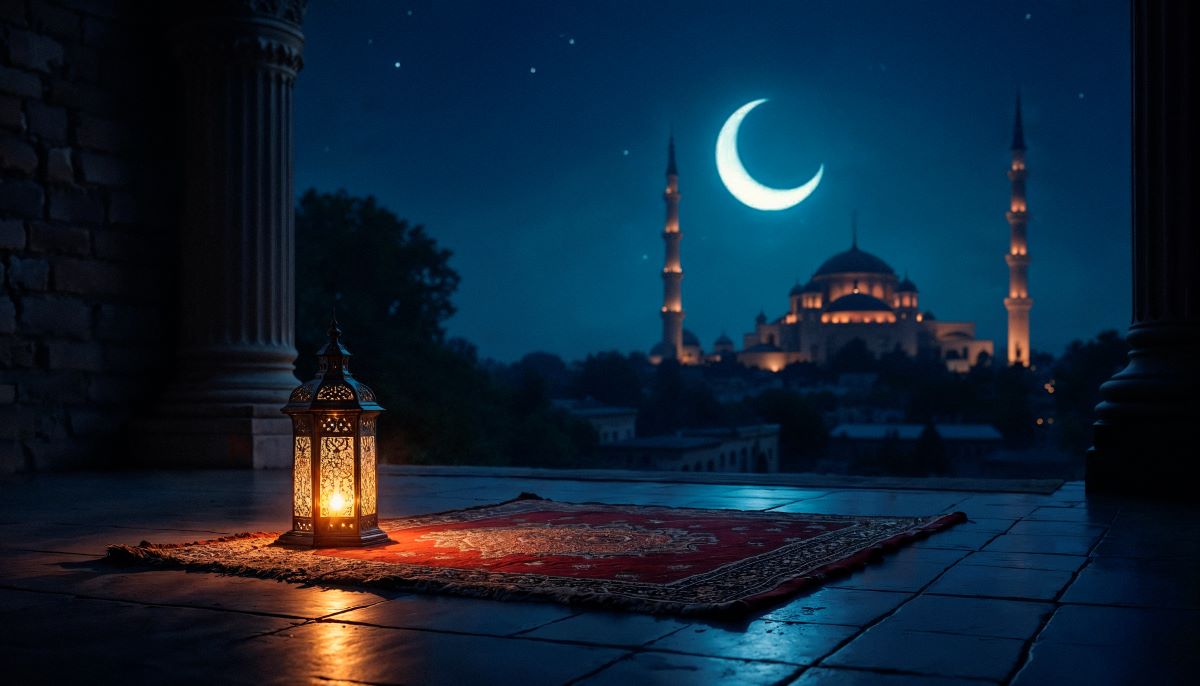
The Night When Angels Descend: Understanding Laylatul Qadr
There's a particular stillness that descends on the last ten nights of Ramadan. The air feels charged with possibility. The hearts of believers quicken with anticipation. For somewhere hidden among these nights lies Laylatul Qadr—the Night of Power—a night that Allah Himself has honored above a thousand ordinary months.
Imagine a single night so blessed that the worship done in it surpasses a thousand months of prayer elsewhere. This is not poetic exaggeration. This is the reality Allah has promised us in the Quran. This is Laylatul Qadr.
If you're reading this, you're searching for something profound. You want to know the Laylatul Qadr dua that opens heaven's doors. You want to understand how to spend this miraculous night in a way that transforms your relationship with Allah forever. And perhaps most importantly, you want to be among those who find this night and witness its blessings before it passes.
This guide will walk you through everything: the Quranic reality of Laylatul Qadr, the most powerful duas, an hour-by-hour worship plan, and authentic hadith that will make your heart soar with hope and urgency.
What Is Laylatul Qadr? The Islamic Definition
Laylatul Qadr literally means "The Night of Power" or "The Night of Decree." It is a night during Ramadan when Allah's mercy descends in extraordinary measure and the divine decrees for the coming year are established.
Allah Himself has devoted an entire surah of the Quran to this night—Surah Al-Qadr (Chapter 97):
"Indeed, We revealed the Qur'an during the Night of Decree. And what can make you know what is the Night of Decree? The Night of Decree is better than a thousand months. The angels and the Spirit descend therein by permission of their Lord with every command. Peace it is until the emergence of dawn." (Quran 97:1-5)
This single night holds a status so elevated that Allah poses a rhetorical question: "What can make you know what is the Night of Decree?" The answer? It is better than a thousand months. Better than 83 years of worship elsewhere.
Allah also mentions this night in Surah Ad-Dukhan (Chapter 44):
"Indeed, We sent the Qur'an down during the Night of Decree. And what can make you know what is the Night of Decree? The Night of Decree is better than a thousand months." (Quran 44:3-4)
The "better than a thousand months" meaning: This doesn't simply mean more blessings. It means if you worship Allah sincerely during Laylatul Qadr, the reward equals worshipping for over eighty years in other times. Your dua carries unprecedented weight. Your repentance reaches unprecedented depths. Your connection to Allah transcends the ordinary.
When Is Laylatul Qadr? Finding the Night of Power
One of the wisdoms of Allah is that Laylatul Qadr's exact date is hidden from us. The Prophet Muhammad (peace be upon him) said:
"Seek Laylatul Qadr in the odd nights of the last ten days of Ramadan." (Sahih Bukhari 1913)
This means Laylatul Qadr falls on one of these nights: 21st, 23rd, 25th, 27th, or 29th of Ramadan. Most Islamic scholars agree that the 27th is the most likely, based on hadith evidence and the practices of the Prophet's companions, but pinpointing it with absolute certainty is impossible—and this is by divine design.
Why is Laylatul Qadr hidden? The Prophet (peace be upon him) explained: "The Prophet was shown the lifespans of the people (before him) or what Allah willed for him to know, and our lifespan has become short in comparison. He said: 'Seek it in the last ten nights of Ramadan.'" (Sahih Bukhari 1913)
Allah hides it to encourage us to worship throughout the last ten nights with equal devotion, rather than sleeping and waiting for a single known date. This transforms the entire last ten days into a spiritual marathon of worship.

The Most Powerful Laylatul Qadr Dua: Hadith of Aisha
One of the most authentic and powerful duas for Laylatul Qadr comes directly from the Prophet (peace be upon him) as narrated by Aisha (radiallahu anha).
The Arabic Text:
اللهم إنك عفو تحب العفو فاعف عني
Transliteration:
"Allahumma innaka 'afuwun tuhibbul 'afwa fa'fu 'anni"
Meaning Word-by-Word:
- Allahumma — O Allah
- Innaka 'afuwun — Verily You are The Pardoner (Al-Afu)
- Tuhibbul 'afwa — You love pardoning/forgiveness
- Fa'fu 'anni — So pardon me
This dua is recorded in multiple authentic hadith collections. Tirmidhi (3513) narrates that Aisha (radiallahu anha) asked the Prophet (peace be upon him): "O Messenger of Allah, if I encounter Laylatul Qadr, what should I say?" The Prophet replied with this dua.
Why is this dua so powerful?
It begins by addressing Allah directly with His name. It acknowledges one of Allah's most beautiful attributes—Al-Afu (The Pardoner). It then connects your request for forgiveness to Allah's own love of forgiveness. Finally, it makes a direct personal petition for pardon. The structure mirrors Islamic theology perfectly: recognition of divine attributes → connection to those attributes → personal request.
The Prophet (peace be upon him) emphasized this dua specifically for Laylatul Qadr, indicating its extraordinary efficacy during this blessed night.
Quranic Verses to Recite on Laylatul Qadr
Surah Al-Qadr (Chapter 97) — The Night of Decree Itself
This surah is specifically revealed about Laylatul Qadr. Reciting it on this night connects you directly to the revealed purpose of the night. Many Muslims recite it hundreds of times on Laylatul Qadr night, seeking its blessings and meditating on its meaning.
Surah Ad-Dukhan (Chapter 44:1-6) — Clarification of the Night
This surah provides additional context about Laylatul Qadr, emphasizing that the Quran was revealed during this night and that it is a night of mercy and guidance.
Surah Al-Ikhlas (Chapter 112) — Pure Monotheism
Reciting this surah on Laylatul Qadr affirms your belief in Allah's oneness and purity of tawheed. The Prophet (peace be upon him) said this surah is equivalent to one-third of the Quran in reward.
Surahs Al-Falaq & An-Naas (Chapters 113-114) — Seeking Refuge
These final surahs of the Quran are protective surahs. Reciting them on Laylatul Qadr protects your worship and your heart from distractions.
Surah Al-Baqarah (Chapter 2:255) — Ayatul Kursi, The Throne Verse
"Allah - there is no deity except Him, the Ever-Living, the Sustainer of existence..." This verse encapsulates the greatness of Allah and His attributes. Reciting it on Laylatul Qadr strengthens your connection to divine majesty.
Authentic Hadith About Laylatul Qadr Rewards
The Prophet (peace be upon him) provided multiple hadith emphasizing the extraordinary reward and significance of this night:
On Witnessing Laylatul Qadr with Faith:
"Whoever prays on Laylatul Qadr with faith and sincerity, his past sins will be forgiven." (Sahih Bukhari 1902)
This hadith is profound. It's not conditional on perfect prayer or perfect knowledge. Even if you don't know with certainty which night it is, simply having faith and sincere intention during the last ten nights guarantees forgiveness.
On the Angels During Laylatul Qadr:
"Gabriel (peace be upon him) descends on Laylatul Qadr with a band of angels, saying peace upon every worshipper." (Tirmidhi 3360)
Imagine—the very angels greet those engaged in sincere worship during this night. The spiritual atmosphere transforms entirely.
On Seeking and Finding It:
"Verily Laylatul Qadr is in the last ten nights of Ramadan. Whoever stands in prayer seeking it with faith and hope for reward, his past and future sins will be forgiven." (Sahih Muslim 1169)

Your Complete Laylatul Qadr Night Worship Plan
To maximize your Laylatul Qadr experience (and ideally, all odd nights of the last ten), structure your night like this:
| Time | Action | Duration |
|---|---|---|
| Maghrib-Isha | Sunnah & obligatory prayers | 45 min |
| After Isha | Dhikr & Taraweeh (if attending) | 60 min |
| Night (11 PM-2 AM) | Intensive dua & Surah Al-Qadr recitation | 180 min |
| Last Third (2-4 AM) | Tahajjud prayer & personal duas | 120 min |
| Before Fajr | Sunnah of Fajr & preparation for dawn prayer | 30 min |
Breakdown of What to Do in Each Period:
Intensive Night Dua Session (11 PM - 2 AM)
- Spend first 30 minutes reciting Surah Al-Qadr repeatedly (50-100 times if possible)
- Spend next 60 minutes making personal duas in Arabic or your native language
- Spend 30 minutes making istighfar (use an istighfar counter to track: aim for 300+)
- Spend 30 minutes reciting durood shareef (peace be upon the Prophet) with a durood counter
- End with the powerful Laylatul Qadr dua from Aisha (radiallahu anha) — 33 times
Tahajjud Prayer (Last Third of Night)
The Prophet (peace be upon him) emphasized: "The best prayer after the obligatory prayers is prayer in the night." (Muslim 1163)
Pray at least 8 rakats of Tahajjud (4 rakas minimum is acceptable). After each raka, make dua in Arabic or your mother tongue. Your personal duas on Laylatul Qadr carry unprecedented weight.
Best Dhikr & Tasbih for Laylatul Qadr Night
Use these specific supplications throughout the night for maximum spiritual benefit:
| Dhikr | Transliteration | Suggested Count | Spiritual Benefit |
|---|---|---|---|
| Astaghfirullaah أستغفر الله |
I seek forgiveness from Allah | 300-500× | Removes sins & opens mercy |
| Subhanallah wa bihamdihi سبحان الله وبحمده |
Glory be to Allah & praise | 100× | Forgives sins like ocean foam |
| Laa ilaha illallah لا إله إلا الله |
There is no god but Allah | 1000+× | Affirms pure faith & tawheed |
| Durood Shareef الصلاة على النبي |
Peace & blessings on Prophet | 200× | Raises status & brings closeness |
Pro Tip: Use digital counters for each dhikr. Our tasbih counter, dhikr counter, and istighfar counter help you track your remembrance easily without distraction.

Common Mistakes to Avoid on Laylatul Qadr
Mistake 1: Wasting Time on Distractions
Laylatul Qadr night is sacred. Put your phone away (except for dua apps and counters). Avoid socializing excessively. This night demands your full presence.
Mistake 2: Only Making Emotional Dua Without Foundation
Emotion is beautiful, but combine it with structure. Balance spontaneous dua with the Aisha dua. Balance personal requests with seeking forgiveness.
Mistake 3: No Physical Preparation
Prepare your body: eat lightly at suhoor, drink water, get rest before night. A rested body worships better than an exhausted one.
Mistake 4: Sleeping Through the Odd Nights
Since you don't know which night is Laylatul Qadr, treat all odd nights (21st, 23rd, 25th, 27th, 29th) with equal devotion. Many Muslims miss this blessing by sleeping.
Mistake 5: No Follow-Up After the Night
Laylatul Qadr isn't just one night—it plants seeds. Follow up with consistent dua and dhikr throughout the year. The night opens doors; you must walk through them.
How to Emotionally Connect With Laylatul Qadr
Beyond the mechanics of dua and prayer, true connection requires emotional and spiritual depth:
1. Recognize Your Own Brokenness: Don't come to Laylatul Qadr praying like you're already perfect. Come as someone who has struggled, fallen short, and desperately needs Allah's mercy. The most powerful duas come from genuine need.
2. Remember Your Mortality: This might be your last Laylatul Qadr. You don't know. Use this urgency not as anxiety but as motivation. Live this night like you'll never get another.
3. Ask for Something Beyond Yourself: Don't just ask for personal desires. Ask for guidance for your ummah. Ask for wisdom to help your family. Ask to become a means of good for others. This expands your heart.
4. Write Your Personal Dua: Before the night, write down 3-5 main duas you want to make. Not to read robotically, but to have them ready so you don't forget in the emotion of worship.
5. Seek Signs of Laylatul Qadr: Some signs mentioned in hadith include unusual stillness, the sun rising without rays (a unique appearance), and a feeling of peace in the heart. While these aren't certain tests, being aware of them keeps your attention elevated.
Frequently Asked Questions About Laylatul Qadr
Q: What is the best dua to recite on Laylatul Qadr?
A: The Aisha dua is most authentic: "Allahumma innaka 'afuwun tuhibbul 'afwa fa'fu 'anni" (O Allah, You are the Pardoner, You love pardoning, so pardon me). Combine this with personal duas in your native language. Both are powerful.
Q: Can I make dua in my own language besides Arabic?
A: Absolutely. While Arabic duas carry the eloquence of the Quran, Allah understands all languages. Your sincere dua in your mother tongue is equally accepted. The Prophet (peace be upon him) said: "Call upon Me and I will respond to you." (Quran 40:60) Language doesn't limit Allah's mercy.
Q: How many hours should I pray on Laylatul Qadr?
A: There's no fixed minimum. Even if you can only pray 2-3 hours sincerely, it's better than sleeping through the night. Quality matters more than quantity. The Prophet emphasized sincere presence.
Q: What if I miss one or more of the odd nights?
A: Don't despair. Even if you miss some nights, engage fully with the remaining ones. Allah's mercy is not limited to one night. He sees your sincere effort and repentance.
Q: Is Laylatul Qadr always on the 27th of Ramadan?
A: While the 27th is most commonly believed to be Laylatul Qadr based on hadith, it could be any of the odd nights (21st, 23rd, 25th, 27th, or 29th). The Prophet emphasized seeking it in the last ten odd nights, so don't skip any.
Q: Can women pray Laylatul Qadr at home, or must they go to the mosque?
A: Women can worship Laylatul Qadr at home or in the mosque. Both are valid. The Prophet said the best prayer for women is in their home. However, if your mosque has a women's area for Taraweeh or Laylatul Qadr prayers, that's also excellent. Choose what helps your focus.
Q: How many rakats (units) should I pray on Laylatul Qadr?
A: There's no fixed number for Laylatul Qadr specifically. If attending Taraweeh (20 rakats in Sunni tradition), that's included. For Tahajjud, 2-8 rakats are appropriate. Some Muslims pray 100+ rakats by doing multiple sets of 2-4 rakats throughout the night. What matters is sincere engagement, not numbered performance.
The Finale: Transform Laylatul Qadr Into Lasting Change
Here's the truth that many don't talk about: Laylatul Qadr is not just about that one night. It's about using that night as a catalyst for transformation that extends into your entire year.
The Prophet (peace be upon him) said: "Whoever prays Laylatul Qadr with faith and sincerity, his future and past sins are forgiven." (Sahih Bukhari 1902)
This isn't just about wiping the slate clean. It's about stepping into a new way of living—one where you remember the mercy of Allah daily, where you recite the Quran with devotion, where you call upon your Lord with desperation and hope.
Many Muslims spend the year asking: "When is Laylatul Qadr?" By the time they remember, it has passed. The blessing escapes them. Don't let this be you.
Start now. Prepare your heart. Learn this dua. Create space in your last ten nights. Commit to standing before Allah with sincere intention.
Use our tasbih counter and dhikr counter to track your nightly worship. Build momentum. Make it real.
O Allah, grant us the ability to witness Laylatul Qadr with sincere hearts and focused minds. Forgive our past, protect our future, and make us among those who find this blessed night and benefit from its incomparable mercy. May the angels greet us during our worship. May our duas reach Your throne. May our tears of repentance become rivers of forgiveness. And may You draw us closer to You with every prayer, every dua, every moment of remembrance during this sacred month. Ameen, ameen, ameen.