Istighfar
Benefits of Istighfar: The Power of Seeking Forgiveness in Islam
Published by Tasbih Hub · 2026-01-02 · 5 min read
Istighfar means seeking forgiveness from Allah. It is one of the most powerful acts of worship in Islam that brings peace to the heart, removes difficulties, and opens doors to blessings. When you say "Astaghfirullah" (I seek forgiveness from Allah), you acknowledge your mistakes and return to your Creator with humility.
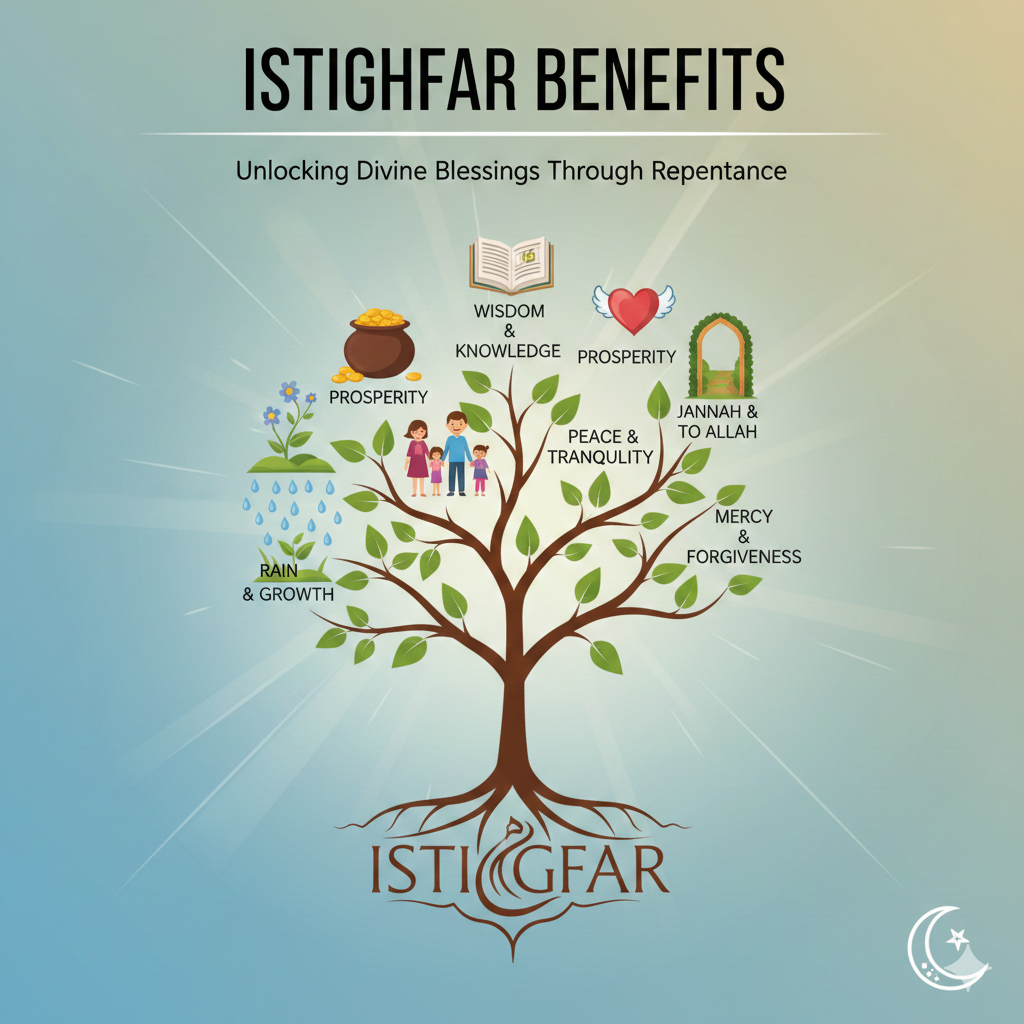
The benefits of Istighfar include forgiveness of sins, increased rizq, relief from anxiety, protection from punishment, and closeness to Allah. Regularly saying Astaghfirullah brings peace to the heart and blessings in both this life and the Hereafter.
In today's busy world, many Muslims use digital tools like an istighfar counter to track their daily remembrance and stay consistent in seeking Allah's forgiveness.
What Is Istighfar?
Istighfar is the act of asking Allah for forgiveness. It comes from the Arabic root word "ghafara," which means to cover or conceal. When Allah forgives, He covers your sins and does not expose them.
The most common form of istighfar is saying:
"أَسْتَغْفِرُ اللَّهَ" (Astaghfirullah) — I seek forgiveness from Allah.
A more complete version is:
"أَسْتَغْفِرُ اللَّهَ الَّذِي لَا إِلَٰهَ إِلَّا هُوَ الْحَيُّ الْقَيُّومُ وَأَتُوبُ إِلَيْهِ"
"I seek forgiveness from Allah, besides whom there is no deity, the Ever-Living, the Sustainer, and I repent to Him."
Benefits of Istighfar in the Quran and Hadith
1. Allah Sends Rain and Increases Rizq (Provision)
Allah says in Surah Nuh:
"Ask forgiveness of your Lord. Indeed, He is ever a Perpetual Forgiver. He will send [rain from] the sky upon you in [continuing] showers and give you increase in wealth and children and provide for you gardens and provide for you rivers." (Quran 71:10-12)
Istighfar opens the doors of rizq (provision). If you are facing financial difficulty or seeking halal income, make istighfar regularly.
2. Removes Anxiety and Stress
The Prophet Muhammad (ﷺ) said:
"Whoever persistently asks Allah for forgiveness, Allah will appoint for him a way out of every distress and a relief from every anxiety, and will provide for him from where he does not expect." (Abu Dawud)
When you feel overwhelmed, stressed, or trapped in a difficult situation, istighfar brings relief and clarity.
3. Forgiveness of Sins
The most obvious benefit of istighfar is the forgiveness of sins. Allah loves those who seek His forgiveness.
The Prophet (ﷺ) said:
"By Allah, I seek forgiveness from Allah and repent to Him more than seventy times a day." (Sahih Bukhari)
If the best of creation sought forgiveness daily, how much more do we need it?
4. Increases Strength and Energy
In Surah Hud, Prophet Hud (AS) told his people:
"And O my people, ask forgiveness of your Lord and then repent to Him. He will send [rain from] the sky upon you in showers and increase you in strength added to your strength." (Quran 11:52)
Istighfar revitalizes your soul and gives you the energy to worship and live productively.
5. Protection from Punishment
Allah says:
"But Allah would not punish them while you were among them, and Allah would not punish them while they seek forgiveness." (Quran 8:33)
Seeking forgiveness is a shield from Allah's punishment in this life and the Hereafter.
How to Make Istighfar Daily
Making istighfar part of your daily routine is simple and rewarding. Here are some practical ways to stay consistent:
- After every salah: Say Astaghfirullah 3 times after completing your prayer.
- Morning and evening: Recite istighfar 100 times as part of your morning or evening adhkar.
- Before sleeping: Seek forgiveness before you go to bed to cleanse your day.
- During difficult times: When facing challenges, make istighfar repeatedly.
- Use a digital counter: Track your daily istighfar using an online istighfar counter to stay motivated.
Many Muslims also use a tasbih counter or dhikr counter to count their daily zikr and istighfar easily on their phone or computer.
Common Mistakes When Seeking Forgiveness
1. Saying It Without Sincerity
Istighfar is not just about repeating words. It requires genuine regret and a sincere intention to stop the sin.
2. Continuing the Sin While Seeking Forgiveness
True repentance means leaving the sin. Asking for forgiveness while planning to repeat the sin is not sincere tawbah.
3. Feeling Hopeless About Allah's Mercy
Some people feel their sins are too great to be forgiven. This is a trick from Shaytan. Allah says:
"Say, 'O My servants who have transgressed against themselves, do not despair of the mercy of Allah. Indeed, Allah forgives all sins. Indeed, it is He who is the Forgiving, the Merciful.'" (Quran 39:53)
No sin is too big for Allah's forgiveness.
Frequently Asked Questions
What is the meaning of istighfar in Islam?
Istighfar means seeking forgiveness from Allah for sins and mistakes. It comes from the Arabic word "ghafara," which means to cover or forgive.
How many times should I say istighfar daily?
There is no fixed number, but the Prophet (ﷺ) used to seek forgiveness more than 70 times a day. Many scholars recommend saying Astaghfirullah at least 100 times daily.
Can istighfar solve my problems?
Yes. According to a hadith, whoever makes istighfar regularly, Allah provides a way out of every difficulty and grants provision from unexpected sources.
What is the best time to make istighfar?
Istighfar can be made anytime, but the best times include after salah, during the last third of the night (Tahajjud time), in the morning, and before sleeping.
Does istighfar increase rizq?
Yes. Allah promises in the Quran that those who seek forgiveness will receive rain (blessings), wealth, children, gardens, and rivers (Quran 71:10-12).
Can I use a digital counter for istighfar?
Yes. Using an online istighfar counter or digital tasbih is a helpful way to track your daily zikr and stay consistent in worship.
Conclusion
The benefits of istighfar are endless. It brings forgiveness, removes anxiety, increases provision, and opens doors you never imagined. Making istighfar daily is one of the easiest and most rewarding acts of worship in Islam.
Start today by saying Astaghfirullah 100 times. To make it easier, use Tasbih Hub's free istighfar counter to track your progress and stay consistent.
You can also explore our other Islamic tools like the durood counter for sending blessings upon the Prophet (ﷺ) and the dhikr counter for your daily remembrance.
May Allah accept your istighfar and grant you His endless mercy.
About Tasbih Hub: Tasbih Hub provides free, simple, and authentic Islamic digital tools to help Muslims stay consistent in their daily zikr, istighfar, and durood using evidence from the Quran and Sunnah.